Deep within the sacred community of Osogbo, a town nestled along the banks of the Osun River, lives the enduring presence of Ọ̀ṣun, the river goddess, also spelled Oshun, a nature’s guardian whose presence sustains both spirit and environment.
Osun is an embodiment of the Osun River and is honored as a guardian of nature. Osun is also believed to dwell in the sacred spaces that line the river’s course. Her essence is inseparable from the river that bears her name; its currents are believed to carry both spiritual power and the blessings of renewal.
Her Origin in Yoruba Cosmology
Osun, one of the most powerful of all orishas (the Yoruba word for gods), is a goddess of love, sexuality, fertility, femininity, water, divination, and the protective deity of the Osun River, which is named after her. In the Yoruba religion, there are about 401 known orishas, but Osun is considered the most popular and venerated.
Myth has it that before Osun was made an orisha by Olodumare, the supreme God in Yoruba belief, she was once a female Irunmole (primordial spirit) sent to assist King Sango of Oyo as a queen escort¹. She was sent down to prepare the earth together with sixteen other deities. Of the seventeen, Osun was the only female and the only deity who had the power to populate the earth.
She brought forth her sweet and powerful waters, bringing life to Earth and humanity. The male orishas, in their selfish interests, disregarded Osun, saying she had nothing to contribute. They treated her without respect and even tried to control her, all in an attempt to make her leave. Osun soon got offended and ascended back to the heaven realm, where she was sent down from
She didn't just leave like that; she took her powers, thereby withdrawing her waters. But not long after, they soon realized that only Osun had the power to bring fertility and abundance to the earth, so they turned back to her for help. With grace, she returned to earth and used her command over water and love to nourish the land, multiplying life and shaping the earth’s people and places.
Osun’s Connection with the People of Osogbo
Osun is profoundly connected to Osogbo, considering that the first connection between Osun and human beings took place in the Yoruba community of Osogbo. Tales have it that Osun appeared to Olutimehin and his people when they first settled in a dense forest, now Osogbo, warning them against desecrating her grove.
Before Olutimehin and his followers first settled, the land was a vast forest, thick with vegetation and alive with unseen spirits. It was into this wilderness that Olutimehin and his people wandered after leaving their former settlement in search of a place to call home. They saw this forest as both promising and fearful, rich in resources yet overshadowed by mystery.
It was here, amidst the tall trees and flowing waters, that they encountered Osun, the river goddess². She appeared to them not merely as a spirit of the land but as its guardian, warning them not to destroy or misuse the forest by the river, which was her sacred dwelling place. In exchange for their reverence, she promised protection, fertility, and peace.
The settlers agreed, and thus the Osun-Osogbo Festival was born as an annual celebration of this covenant.

The Osun-Osogbo Festival, one of Osogbo’s most celebrated cultural events, draws visitors from across the world each year. Even as the festival has evolved over the years, it still retains one core purpose: to honor Osun, seek her blessings, and renew the bond between the people of Osogbo and their divine protector.
At the heart of this tradition lies the Osun-Osogbo Sacred Grove, a revered site where believers, community members, and well-wishers gather to honor the goddess. Within the grove, offerings and sacrifices are presented, and in return, devotees seek help from the Osun goddess.
Each August, the festival renews this covenant, transforming the sacred forest into a living space of worship, cultural pride, and communal preservation. This festival serves as a strong unifying factor between the Osun goddess and the people of Osogbo. Irrespective of their different social, economic, religious, and political convictions, they all come together annually to celebrate this tradition³.
The Osun-Osogbo Grove and Osun River as the Embodiment of Her Duty to Nature
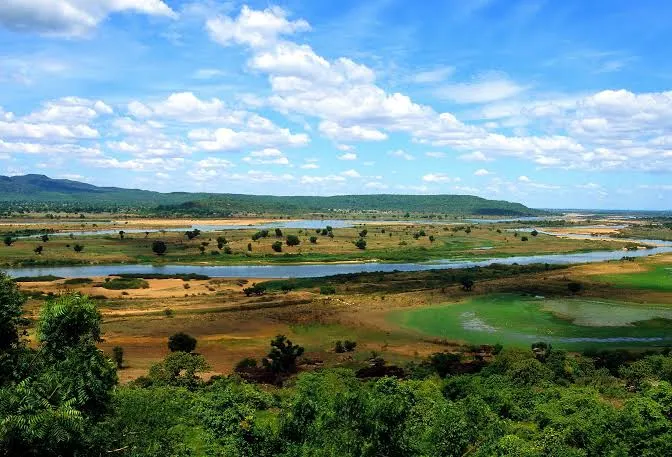
Osun serves as a protector of the environment primarily through the Osun-Osogbo Sacred Grove and the Osun River. Because Osun’s essence is water, to pollute or exploit a river is not merely an offense against nature but an affront to the goddess herself. As a result, the people of Osogbo have devoted themselves to keeping the Osun River and every other freshwater source in the community preserved and unpolluted.
Osun's duty to her people is not passive but conditional on her reverence. Just as honoring her ensures fertile lands and clean waters, disregarding her laws invites destruction. When angered, Osun may flood the earth or destroy crops by withholding her waters, thereby causing massive droughts. In one myth, she is incensed by her devotees and sends down rain, nearly flooding the world. Yet once she has been appeased, Osun calls back the waters, restoring balance and saving the land from what might look like the end⁴.
The sacred grove is situated along the banks of the Osun River, just outside the city of Osogbo, Osun State. In recognition of its global significance and cultural value, the Sacred Grove was inscribed as a UNESCO World Heritage Site in 2005⁵. It is preserved through cultural beliefs, spiritual practices, and traditional laws that restrict activities like fishing, hunting, and tree felling within its boundaries. For centuries, the sacred grove has played a significant role in biodiversity conservation.
Continuity of the Myth in Environmental Stewardship
Belief in Osun shaped a clear set of environmental ethics across Yorubaland, particularly in Osogbo. Revering the water deity, Osun, also means respect for her dwelling places, making their preservation both a spiritual duty and an ecological necessity.
When water is sacred, people avoid dumping waste into it. When a grove is the goddess’s home, cutting trees or hunting there becomes an act of sacrilege. International recognition has helped extend this continuity into formal protection. The inscription of the Osun-Osogbo Sacred Grove as a UNESCO World Heritage Site brought global visibility and a management rule that complements environmental stewardship⁶.
To date, the Grove and Osun River remain a living, thriving heritage globally, with traditional landmarks and a veritable means of transferring indigenous knowledge systems to African people in the Diaspora.